There is a taco joint in Fort Worth that has been packed every Friday night for 14 years. The owner knows every regular by name. His carnitas recipe has not changed since his grandmother handed it to him on a folded index card. The food is extraordinary.
His Google listing has three blurry photos taken on someone's phone in 2019. His competitor down the street — open for eight months — has a full gallery of plated dishes, kitchen action shots, and a 30-second reel that makes you hungry before you finish watching it.
Guess which one the out-of-towner picks when they search "best tacos near me" at 7 PM on a Saturday.
This is not a story about quality. Both restaurants make great food. It is a story about visibility. And visibility, for restaurants and food brands, is won or lost on photography.
The data is not subtle. Yelp data shows restaurants with professional photos receive 2x more views compared to those relying on amateur images, and OpenTable's diner survey found 75% of diners check restaurant photos before booking. Diners are visual decision-makers — the overwhelming majority look up a restaurant online before walking through the door, and what they see in those first few seconds determines whether they keep scrolling or make a reservation.
Cornell's Center for Hospitality Research found high-quality menu photography increases food orders by 30%. That is not a marketing theory. That is revenue sitting on the table — literally — waiting to be captured by a camera that knows what it is doing.
Short-form video compounds the effect. Instagram's data on food content engagement rates consistently shows that a 15-second clip of a chef finishing a plate or a bartender pouring a signature cocktail performs better in social algorithms than any static post. But the foundation is still the photography. Video without strong stills is a house without a frame.
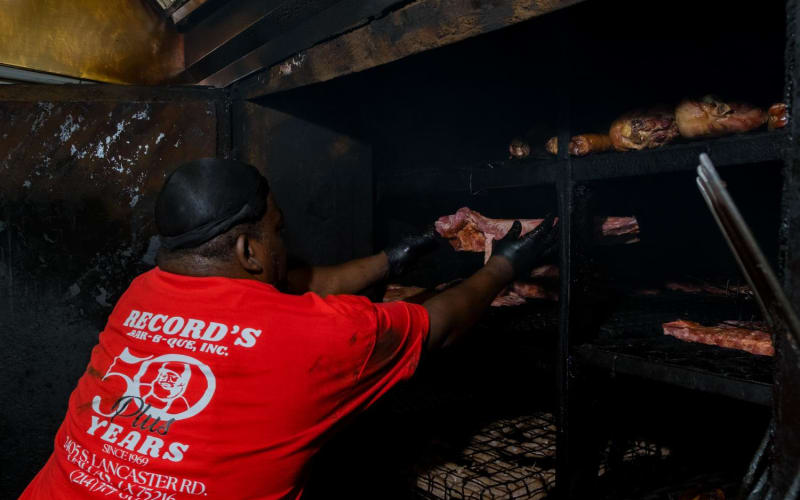
Most restaurants think food photography means putting a dish on a white plate and pointing a camera at it. That is product photography. It has its place — on a delivery app, in a menu PDF. But it is not what builds a brand.
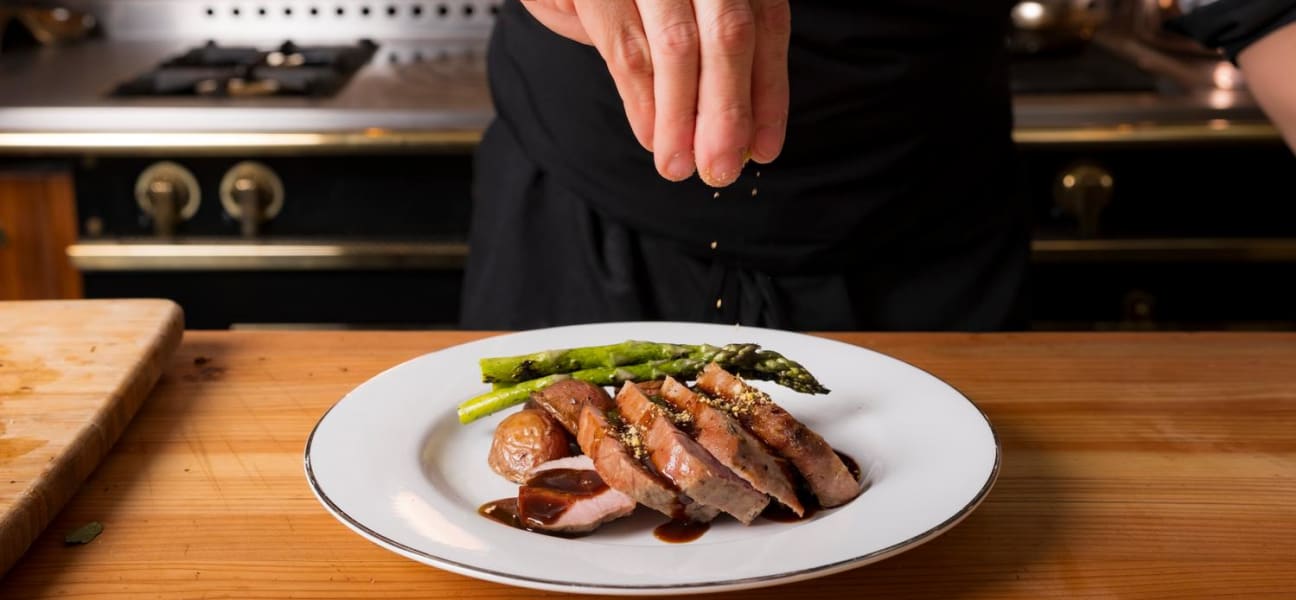
The photography that drives real business results tells a story. It captures the environment, the hands, the process, the moment the plate hits the table. It shows the steam rising off the grill, the bartender's pour, the way the light catches a glaze. It makes someone feel like they are already sitting in that restaurant.
This is the difference between content that fills a website and content that fills a dining room.
The best food photography includes several distinct layers. Process shots showing how the food gets made — the sear, the garnish, the final wipe of the plate rim. Detail work that captures textures and colors people can almost taste through the screen. Environmental context that puts the food in the space where it lives, whether that is a white-tablecloth dining room, a barbecue pit, or a food truck window. And the human element: the chef's hands, the server's presentation, the diner's reaction. Pairing stills with video marketing for restaurants takes that storytelling even further, engaging diners before they ever step through the door.
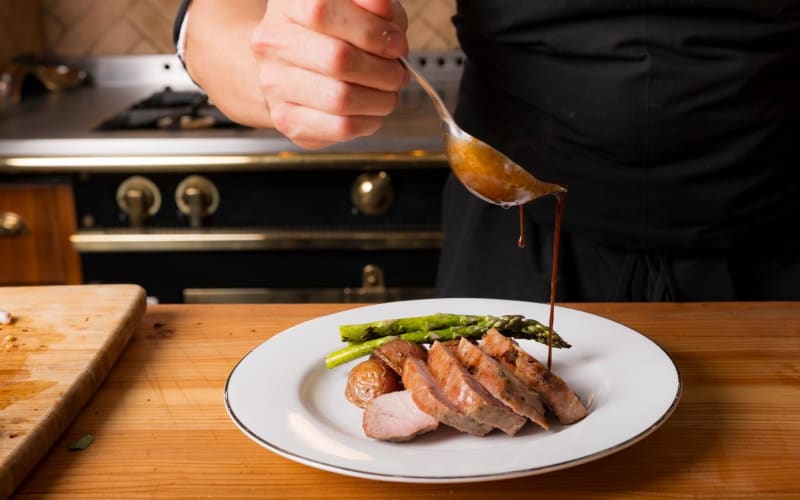
The most common mistake is treating photography as a one-time expense. A restaurant shoots 20 dishes on a Tuesday afternoon, uploads them to the website, and calls it done for the next three years. But menus change. Seasons change. The dining room gets renovated. The chef you hired last spring brings a completely different energy to the kitchen.
Photography that works is photography that stays current. The restaurants winning on visual content are not doing annual shoots. They are building ongoing libraries — updating their Google listing with fresh images monthly, rotating their social content weekly, and capturing new menu items as they launch instead of six months later. Event photography for restaurants and hospitality is another powerful way to build that library, turning private dinners, chef's tables, and seasonal events into content that lives far beyond the night itself.
The second mistake is ignoring platforms. A photo that works on Instagram does not necessarily work on Google Business. A wide shot that looks stunning on a website banner gets cropped into nonsense on a Yelp listing. Good food photography accounts for where the images will live and shoots accordingly — multiple compositions, multiple aspect ratios, multiple stories from the same session.
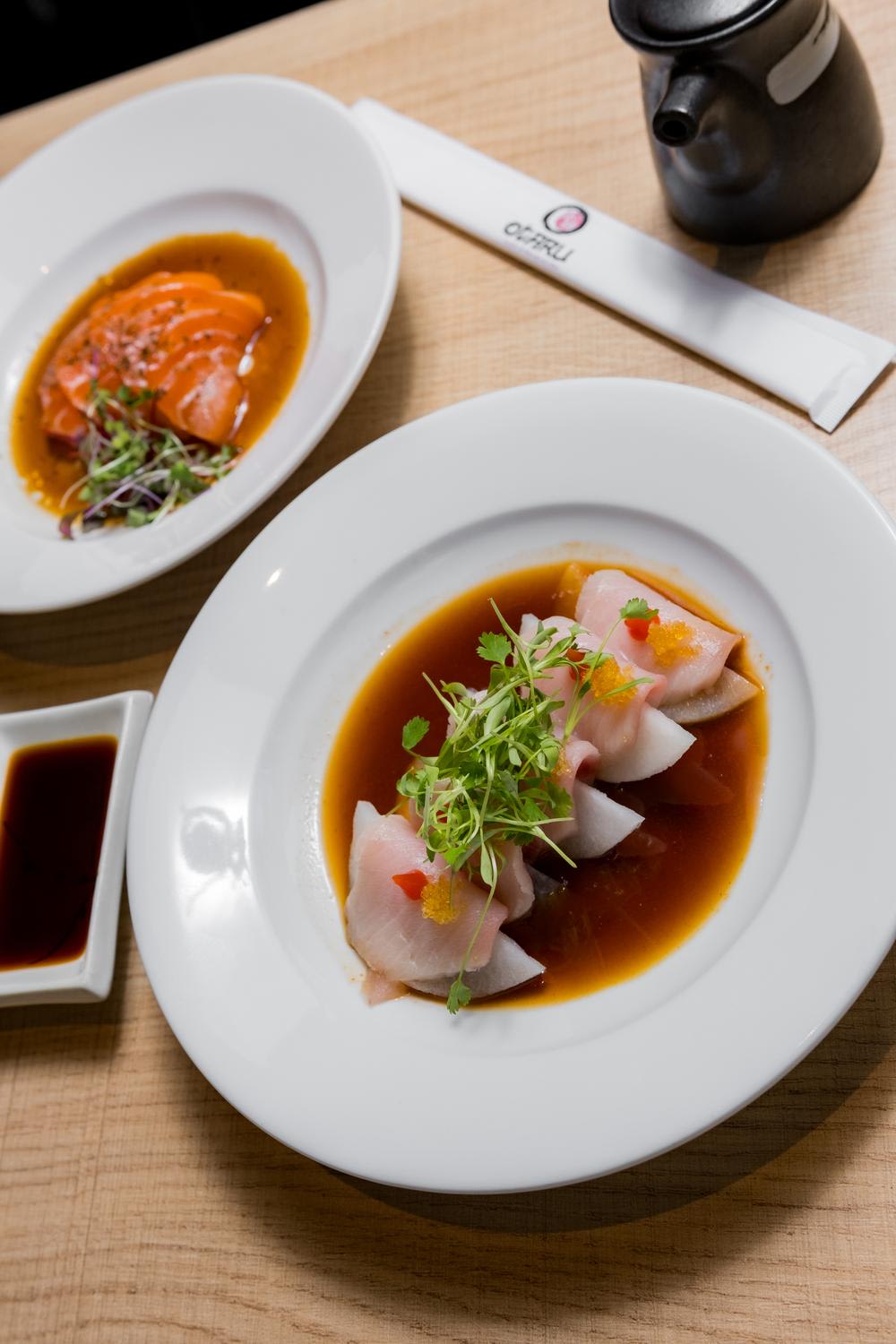
Here is what most food and beverage businesses underestimate: photography compounds. Every session adds to the library. Every new image gives you another piece of content for social, another option for a seasonal menu update, another asset for a PR feature or a catering pitch deck. A restaurant that invests in consistent visual content for 12 months has an archive that no competitor can replicate overnight.
And it is not just about customers. Photography affects hiring, too. A line cook deciding between two restaurants is going to look at how each one presents itself online. The one that looks professional, intentional, and proud of its work wins. The one with a stock photo of a generic kitchen loses.
The National Restaurant Association reports visual content is now the top marketing channel for independent restaurants — which means the decision is no longer whether to invest in photography, but how consistently and strategically to do it.
If your kitchen is making something people come back for, the hardest part is already done. The food is real. The craft is real. The only missing piece is making sure the people who have not found you yet can see what your regulars already know.
That is what we do at VANTAS Productions. We work with restaurants, bars, breweries, and food brands to turn what happens in the kitchen into content that works across every channel — from your Google listing to your Instagram grid to the banner on your website. Not stock. Not staged. Real food, real people, real stories. If you are thinking about hiring a production company for your next shoot, we have laid out exactly what to look for so you make the right call.
If your food is better than your photos, book a discovery call with our Creative Director or reach out at hello@wearevantas.com. We will show you what your brand looks like when the camera matches the kitchen.
A well-planned half-day food photography shoot produces 40-80 hero dish images, 20-30 detail and texture shots, and 10-20 environmental and team images — sufficient to refresh a website, populate social media for 2-3 months, and update Google Business and Yelp listings. A full-day shoot with video capture can produce enough material for an entire quarter across all platforms.
{
"@context": "https://schema.org",
"@type": "FAQPage",
"mainEntity": [
{"@type":"Question","name":"Why does food photography matter more for independent restaurants than for chains?","acceptedAnswer":{"@type":"Answer","text":"Chains have brand recognition that carries people through the door before they ever see a photo. Independent restaurants do not. For a first-time diner choosing between three options on Google Maps, the quality of the photos is often the deciding variable. Professional food photography is the independent restaurant's most efficient marketing spend because it works everywhere: Google Business, Yelp, Instagram, the website, and local press."}},
{"@type":"Question","name":"How often should a restaurant update its food photography?","acceptedAnswer":{"@type":"Answer","text":"Seasonally at minimum, and whenever the menu changes significantly. A restaurant's visual identity should reflect its current menu, its current space, and its current brand — not a shoot from three years ago. For restaurants with active social presences, monthly content shoots ensure the visual library stays fresh and the social feed does not stagnate."}},
{"@type":"Question","name":"What is the best time of day to photograph restaurant food?","acceptedAnswer":{"@type":"Answer","text":"It depends on the restaurant's concept and physical space. Restaurants with strong natural light should shoot during daytime hours when that light is at its best — typically late morning to early afternoon. Dimly lit atmospheric restaurants often photograph better with controlled artificial lighting setups. The best shoots plan around the space's strongest light, not a generic \"golden hour\" rule."}},
{"@type":"Question","name":"Should restaurants show the kitchen and staff in their photography?","acceptedAnswer":{"@type":"Answer","text":"Yes, and most do not enough. The chef and kitchen team are part of the story. Showing real preparation — a chef plating a dish, a bartender building a cocktail, a server bringing food to the table — creates the kind of authentic visual narrative that pure product food shots cannot. Diners want to feel the energy and craft of the place, not just see finished dishes."}},
{"@type":"Question","name":"How many photos does a restaurant actually need from a single shoot day?","acceptedAnswer":{"@type":"Answer","text":"A well-planned half-day food photography shoot produces 40-80 hero dish images, 20-30 detail and texture shots, and 10-20 environmental and team images — sufficient to refresh a website, populate social media for 2-3 months, and update Google Business and Yelp listings. A full-day shoot with video capture can produce enough material for an entire quarter across all platforms."}}
]
}